by Michael Van Den Berg
Introduction
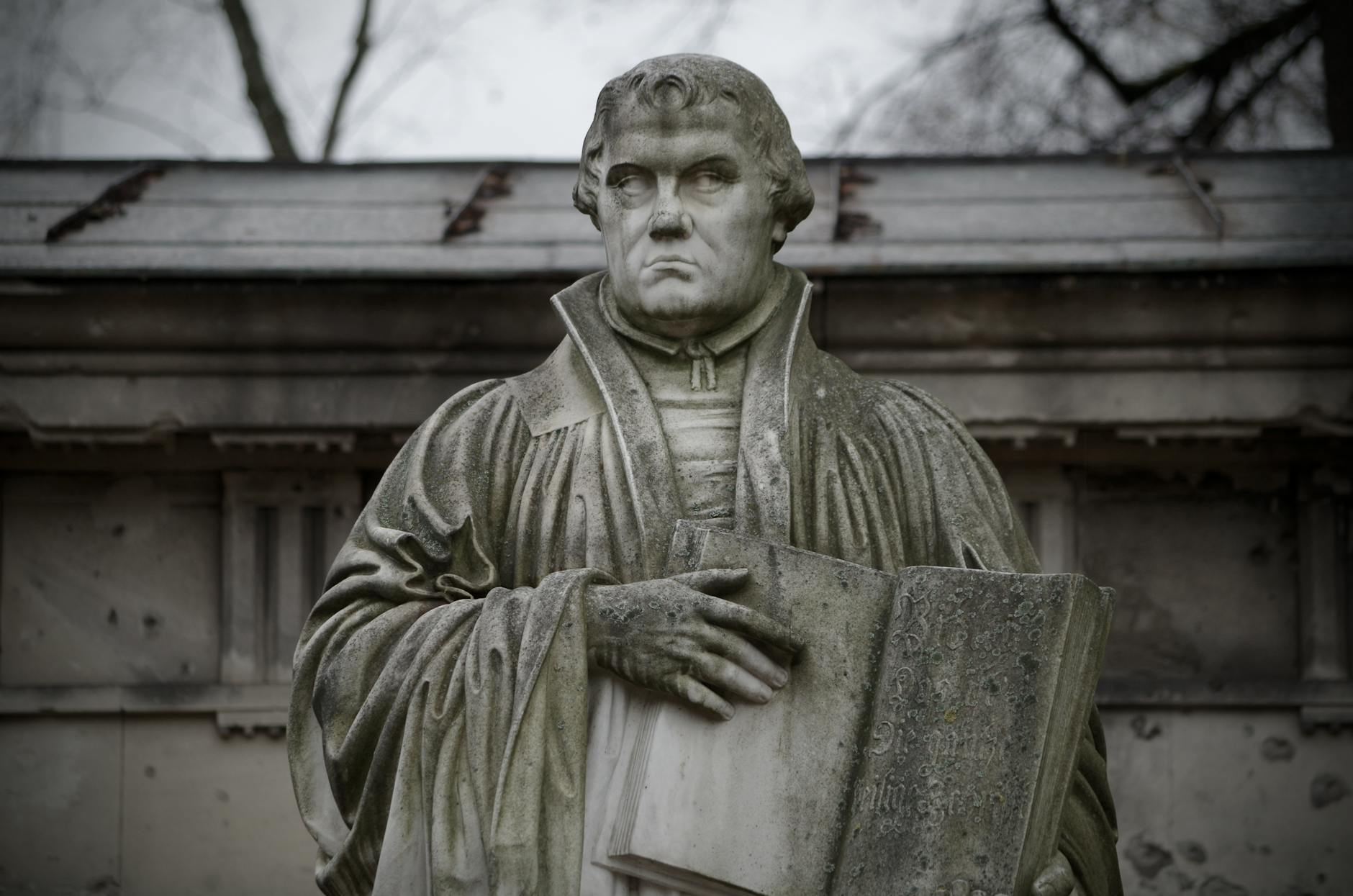
The great protestant reformation brought on by Martin Luther in 1517 set in motion a chain of events that would forever change the face of Christianity and, by extension, the world. This movement caused a mass breakaway of Christians from the Roman Catholic church, based on a new set of beliefs that would come to be known as the ‘solas’. Sola scriptura – when from Latin, means ‘scripture alone’, was the most controversial new belief at the time of the reformation as it dictates that the Bible is the ultimate and only authority of faith and practice, and this was in direct conflict with the church at the time, where many practices came from tradition. 2 Timothy 3: 16 – 17, is often used as the verses that gives Sola scripura its authority, as it states that all scripture is God-breathed. This belief set in motion an understanding of several other faith-related concepts that would form the rest of the Solas.
This essay will argue that Sola Scriptura is the foundation of all the other Solas, as the beliefs are authenticated by scripture. In the sections that follow, Sola Scriptura will be explained as the foundation for Sola fide (faith alone), Sola Gratia (grace alone), Solus Christus (Christ alone), and Soli Deo Gloria (To God’s glory alone). The final section will detail how these observations and foundations of the Protestant Reformation can be applied in a modern setting.
Sola scriptura as the foundation of Sola Fide
An article by Daniel Hyde from Legionier Ministries perfectly explains the concept of “Sola Fide” by stating that: “we are accounted as righteous before God through our faith in Christ alone”. This significant discovery, or as Luther refers to it, rediscovery as part of the reformation, came directly from Martin Luther interacting with scripture in his search for clarification on justification before God. This led him to the realization that our justification comes from faith, and faith alone. This came from a time when Luther was eagerly spending time in the bible, looking for answers, as he himself explained how he arrived at this conclusion in 1519, as part of what would come to be known as his ‘tower experience’. Luther concluded that we can be made just by reading Romans 1:17. Romans 1:17 details that God’s righteousness is a gift offered through the gospel and received by faith. This revelation came through scripture, and thus ‘Sola fide’ could only be established by ‘Sola scriptura’.
Sola Scriptura helped establish this core belief, but it also makes Sola fide defendable by scripture and invulnerable to distortion. If justification could be possible by other means, the Bible would have mentioned it. During the Reformation, the Catholic church had other methods of justifying people before God as part of their “cooperation” agenda, where we are justified through a combination of faith and ‘deeds’ on the part of the person seeking justification. Dr. Van Lees explores this concept greatly in his article, ‘The Sixteenth Century debates on Justification’, and specifically mentions that the deeds that people had to perform as part of their justification included participating in church sacraments such as penance. The church’s version of ‘penance’ was not just about repentance, but also involved following several traditional practices that can’t be fully verified as coming from the bible. Whereas, as seen in Romans 1:17, Justification is mentioned clearly as a result of our faith. This revelation was not only extremely profound for Luther himself, but also for the church’s general understanding of Justification, and how to guide church members towards it.
Sola scriptura as the foundation of Sola Gratia
When translated from Latin, Sola Gratia means “Grace alone”, and in essence means “that your salvation is purely on the basis of God’s sheer gracious love”. This concept affirms the fact that humans don’t contribute at all to their salvation, but it is God who initiates and completes the process of mankind’s salvation through his grace, and that it is given as a gift that was only made possible through Christ’s sacrifice on the cross. This was in stark contrast to the church’s teachings in the 16th century, which, much like the concept of justification, taught that salvation is gained through a combination of grace, participation in sacraments, and merit. Luther, however, argued that, by once again looking solely at the bible (Sola scriptura), salvation was by grace alone, which directly opposed the Catholic church’s view.
Luther’s primary findings can be traced to his understanding of Ephesians 2:4-5, which outright states that because of God’s great love for humanity, we are saved by Grace. Luther was adamant that being saved by grace alone was not a new discovery, but in fact a rediscovery of a truth that is completely biblical, a truth that the church had strayed away from. Sola scriptura further helps to solidify the argument that we are saved by grace alone, and that our salvation is only as a result of God’s love. Romans 3:23-24 details this when explaining that all men have fallen short of the glory of God, and that it is only through the grace God offers us through Christ’s sacrifice that we can be justified, and by extension be saved. Only through scripture can the workings of God’s grace and its functioning be argued and given authority, not through the words of any man.
Sola scriptura forms the base and explanation for God’s grace by detailing how God shows grace throughout the Bible. This includes God’s constant grace with the nation of Israel, the details of Christ’s redemptive work, and the result of the grace being put into action by the apostles, who set out to share the news of God’s grace with others.
Sola scriptura as the foundation of Solus Christus
The English translation of Solus Christus from Latin means “Christ alone” and is based on Luther’s claim that Jesus Christ is the sole mediator between mankind and God. This claim caused widespread controversy and conflict during the reformation as this doctrine outright rejects the additional need for merit, priests, and saints for reconciliation with God, which opposed the Catholic church’s teachings at the time directly. The Catholic church to this day believes that saints help bridge the gap between God and man, as they help to intercede on our behalf, and due to them being ‘closer’ to God, their prayers help Christians in their lives in addition to the sacrifice of Jesus. The doctrine of Solas Christus is once again based solely on Sola scriptura, where scripture was the basis of affirming Jesus’s uniqueness and describing his role in our reconciliation with God.
Today, the Catholic church has a much clearer distinction between the role of saints and Christ; however, during the Reformation, the intense focus on honouring the saints gradually obscured Christ’s unique role. The veneration of saints was a big contention point, and Sola scriptura clearly states that Jesus is the only mediator between mankind and God. 1 Timothy 2:5 states that there is only one God, and one mediator between man and God, and that is Christ Jesus. It is also only through sola scriptura that Jesus’s uniqueness is explained and his nature as fully man and fully God is confirmed in several places in the Bible.
Sola scriptura also fully protects the concept that Jesus is the only mediator between man, where several modern-day movements try to dismiss him as simply a good moral teacher, and try to place him alongside other religious figures. When scripture is held up as the highest authority, the fact that Jesus is the only way becomes clear. Jesus says in John 14:6 that he is in fact the way, the truth, and the life, and no one comes to the Father except through him.
Sola Scriptura as the foundation of Soli Deo Gloria
Soli Deo Gloria means “to God alone.” This lies at the heart of the reformation, and all reformers agree that all life, every action, our salvation, and the entire practice of faith are to give glory to God. Sola scriptura also forms the basis for this doctrine. Without scripture, God’s glory would be left open to speculation, people’s imaginations, and even cultural interpretations, but scripture clearly displays God’s glory. The Bible frames God as the key and central figure of the Bible. From God creating all creation, the fall of man in sin, his relationship, his relationship with Israel, and the redemptive story of Jesus Christ, all these point back to God and his infinite glory.
In the years before the Reformation in the 16th century, many aspects of the church started to redirect their glory away from God and towards man. This was by elevating Popes and Saints, and putting much more emphasis on human effort. Reformers felt that the different Popes misused their authority on earth, and this was taking glory away from God.Reformers challenged the church with Soli Deo Gloria with great conviction, as they felt they were fighting for God’s glory to be restored. They did this by quoting scripture, further involving Sola scriptura as the foundation for this doctrine. Only the Bible had the authority to correct the direction of glory back to God in the church, not man. Scripture calls the church always to direct glory to God, which can be seen in Ephesians 3:21, where Paul outright states that glory should go to God in the church, through all generations.
Contemporary Application
In today’s society, Sola Scriptura remains very significant as it protects Christians from falsehoods and guides Christ-centered decision making in a world where moral relativism and other cultural influences are directly assaulting the church. Today, the overwhelming pressures of the world and the sway of popular opinion are having a direct effect on how the church handles serious issues such as abortion, LGBTQ+ marriages, and its stances on war and peace. In 2023, the previous Pope, Pope Francis, approved a document that allows priests of the Roman Catholic Church to bless same sex marriages. This ruling would have been unthinkable to some of the other previous Popes, who took a more conservative stance on same sex marriages. This issue demonstrates that the church’s stance on contemporary issues is subject to change depending on the personal views of some of the leaders. Suppose Sola scriptura is to be used as the everlasting standard on matters. In that case, even contemporary issues can be addressed with a clear and authoritative answer, as it comes from God, not a church leader’s convictions. No matter the issue or the trend, just as Sola scriptura was the foundation for understanding different aspects of the Christian faith, during the Reformation, it ought to form the foundation for the church’s approach to any issue in this modern-day world.
Sola scriptura also holds great significance for church life in general. It calls teachers of the word to live according to what they preach and embody the character of Christ (Romans 8:29). In discipleship, the Bible brings clarity to a world in confusion and brings light as a form of guidance (Psalm 119:105). As for church governance, the bible confirms that no spiritual leader, worldly leader, or even a movement can override the authority of scripture, as God’s authority takes precedence over any man, as seen in Ephesians 1:21.
The emergence of social media has also significantly affected people’s formation of ideologies and belief systems. Christopher Cunningham’s article examined social media’s impact on religion, reporting, “Social media has provided a venue to channel religious fervor without institutional oversight.” This has led to people being exposed to more opinions than ever before, and it can confuse modern-day Christians into following more extreme practices that are not biblical. This is where Sola scriptura’s importance is more relevant than ever, as by basing one’s faith practices just on scripture, and scripture alone, these opinions that were meant to confuse can be seen as false, as scripture acts as a guide to truth. In this way, the bible can be seen as the ultimate compass to help navigate the complexities of contemporary life, as it guided Christians during the Reformation.
Conclusion
The Protestant Reformation was not simply a response to the corruption in the Catholic church at the time, but a theological revolution based on the authoritative word of God. At the core of it all is Sola Scriptura, the understanding that only scripture should be the basis for the Christian faith and its practices. This essay demonstrated how the beliefs of Sola fide, Sola Gratia, Solus Christus, and Soli Deo Gloria were all based on scripture, and the beliefs were all given authority and coherence through that same scripture. Justification by faith, our salvation through grace, Jesus as the sole mediator, and the glorification of God alone are not doctrines established by man through tradition, as many of the church’s doctrines were, but rather, they were fully established through the written word of God in the form of scripture. Without Sola scriptura, these doctrines would not hold any authority whatsoever, but would be vulnerable to misinterpretation and erasure. With scripture as the basis, all the doctrines that came from the Reformation can withstand the test of time, and keep their relevance from generation to generation, as the source material, the bible will forever maintain its relevance and its strong authority as the word of God.
Bibliography
Berntson, Levi. “What Does ‘Sola Gratia’ Mean?” Ligonier Ministries, 2025. https://learn.ligonier.org/articles/sola-gratia-mean.
Cunningham, Christopher D. “How Social Media Has Changed the Religious Experience.” Public Square Magazine, December 28, 2019. https://publicsquaremag.org/media-education/how-social-media-has-changed-the-religious-experience/.
Editors of the Encyclopedia Britannica. “Reformation.” In Encyclopædia Britannica, February 8, 2019. https://www.britannica.com/event/Reformation.
Godfrey, W.Robert. “Protestants and the Pope.” Westminster Seminary California, 2024. https://www.wscal.edu/resource/protestants-and-the-pope/.
Hyde, Daniel R. “What Does ‘Sola Fide’ Mean?” Ligonier Ministries, 2025. https://learn.ligonier.org/articles/sola-fide-mean.
Jamieson, Robert, A R Fausset, and David Brown. A Commentary Critical and Explanatory on the Whole Bible. Grand Rapids, Mich.: Zondervan, 194, 1997.
Lees, Dr Van. “The Sixteenth Century Debates on Justification.” Covenant of Grace Church, May 21, 2013. https://covenantofgracechurch.org/the-sixteenth-century-debates-on-justification/.
Luther, Martin, and John Dillenberger. Martin Luther : Selections from His Writings. New York: Doubleday, 1988.
Petruzzello, Melissa . “Roman Catholic Saints.” In Encyclopædia Britannica, 2019. https://www.britannica.com/story/roman-catholic-saints-hallowed-from-the-other-side.
Pole, Gregory. “Merit & Grace in the Late Medieval and Early Modern Period, Part 1.” Into the Clarities, March 5, 2016. https://intotheclarities.com/2016/03/05/merit-grace-in-the-late-medieval-and-early-modern-period-part-1/.
Sannіkov, Serhii. “5 Sola Reformation. Theological Principles of Heterogenious Protestantism.” Skhid 0, no. 3(149) (August 6, 2017): 83–92. https://doi.org/10.21847/1728-9343.2017.3(149).108347.
Santrac, Aleksandar S. “The Legacy of Martin Luther’s Sola Fide – Spectrum Magazine.” Spectrum Magazine, October 8, 2019. https://spectrummagazine.org/views/legacy-martin-luthers-sola-fide/.
Thorton, Andrew. “Modern History Sourcebook: Martin Luther: Tower Experience, 1519.” Uoregon.edu, 2024. https://pages.uoregon.edu/sshoemak/323/texts/Luther%20Tower%20Experience.htm.
Vock, Ido. “Pope Says Roman Catholic Priests Can Bless Same-Sex Couples.” BBC News, December 18, 2023, sec. Europe. https://www.bbc.co.uk/news/world-europe-67751600.
White, Dr. Thomas. “Soli Deo Gloria.” Cedarville University, July 5, 2024. https://www.cedarville.edu/news/2024/soli-deo-gloria.
Whitford, David M. Martin Luther in Context. Cambridge University Press, 2018.
Wright, Shawn . “Luther’s Battle for Sola Scriptura.” Southern Equip, October 9, 2017. https://equip.sbts.edu/article/luthers-battle-for-sola-scriptura/.

 The Scroll Unrolled
Leave a comment